


DPP

IntroducingEgypt's first Digital Product Passport!
As part of our continuous expansion in cleantech innovation, Dawar has extended its services to include Digital Product Passports, a requirement that will soon be essential for companies exporting to Europe. A Digital Product Passport (DPP) is a digital record that holds verified and standardized information about a product’s lifecycle from how and where it was made, to what materials it contains, how it can be repaired or recycled, and its overall environmental footprint.
Get your DPP!
Regulatory Compliance and Standards

Product Overview
This category contains foundational product identity (UPI) and metadata that uniquely describe the product and its origins.

Materials and Composition
This category details the physical makeup of the product, including constituent materials, substances, and processing histories.

Environmental Impact
This section captures quantified environmental performance and sustainability indicators (Energy consumption, emissions data etc.) over the product lifecycle.

Social Impact
At a social level, it helps consumers make more informed and ethical choices by showing where and how a product was made, including information about labor conditions, sourcing practices, and compliance with social standards.

Repairability and Durability
This section documents how long the product is designed to last and how easily it can be serviced or repaired.

End of Life Cycle
This category focuses on how the product should be handled when it reaches the end of its useful life, maximizing recovery, reuse, and recycling potential.
Dawar provides Upfuse with its first DPP
To pioneer this shift in Egypt’s compliance to EU exports under the Eco Design for Sustainable Product Regulation (ESPR) law, Dawar sought a partner whose values and operations are rooted in sustainability and Upfuse was the natural choice. Upfuse is a well-established Egyptian brand known for its eco-conscious approach, using recycled materials and ethical production to create fashion items and accessories with a minimal environmental footprint.
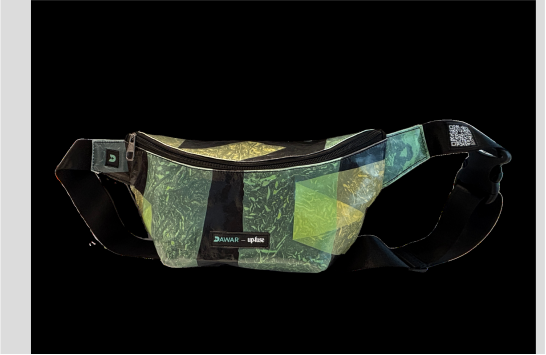
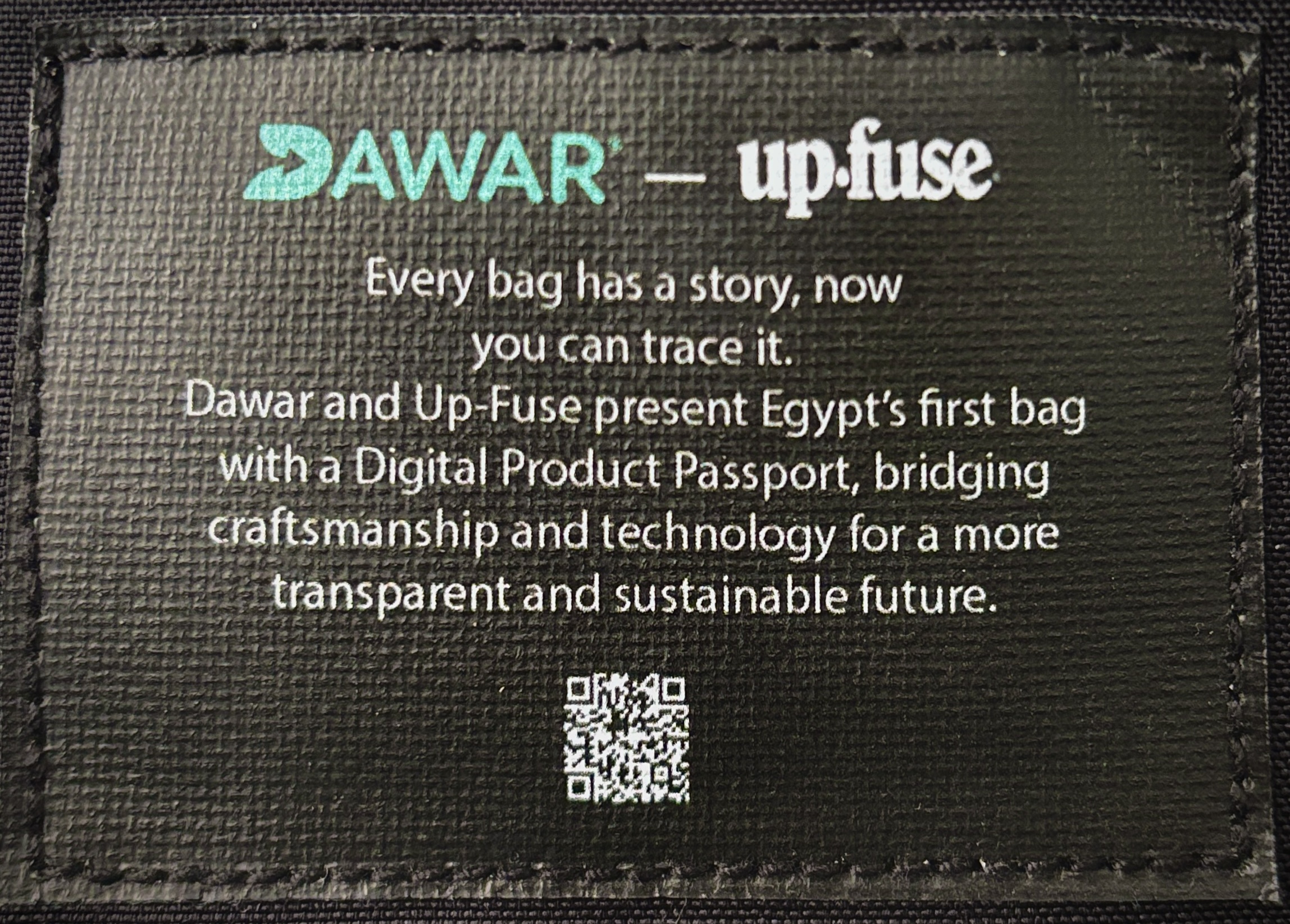
Developing a digital product passport requires addressing different aspects of the product such as material composition which states the use of recycled material. In that case Upfuse used plastic bags collected from waste material, washed and hanged to dry by women from the waste management community.
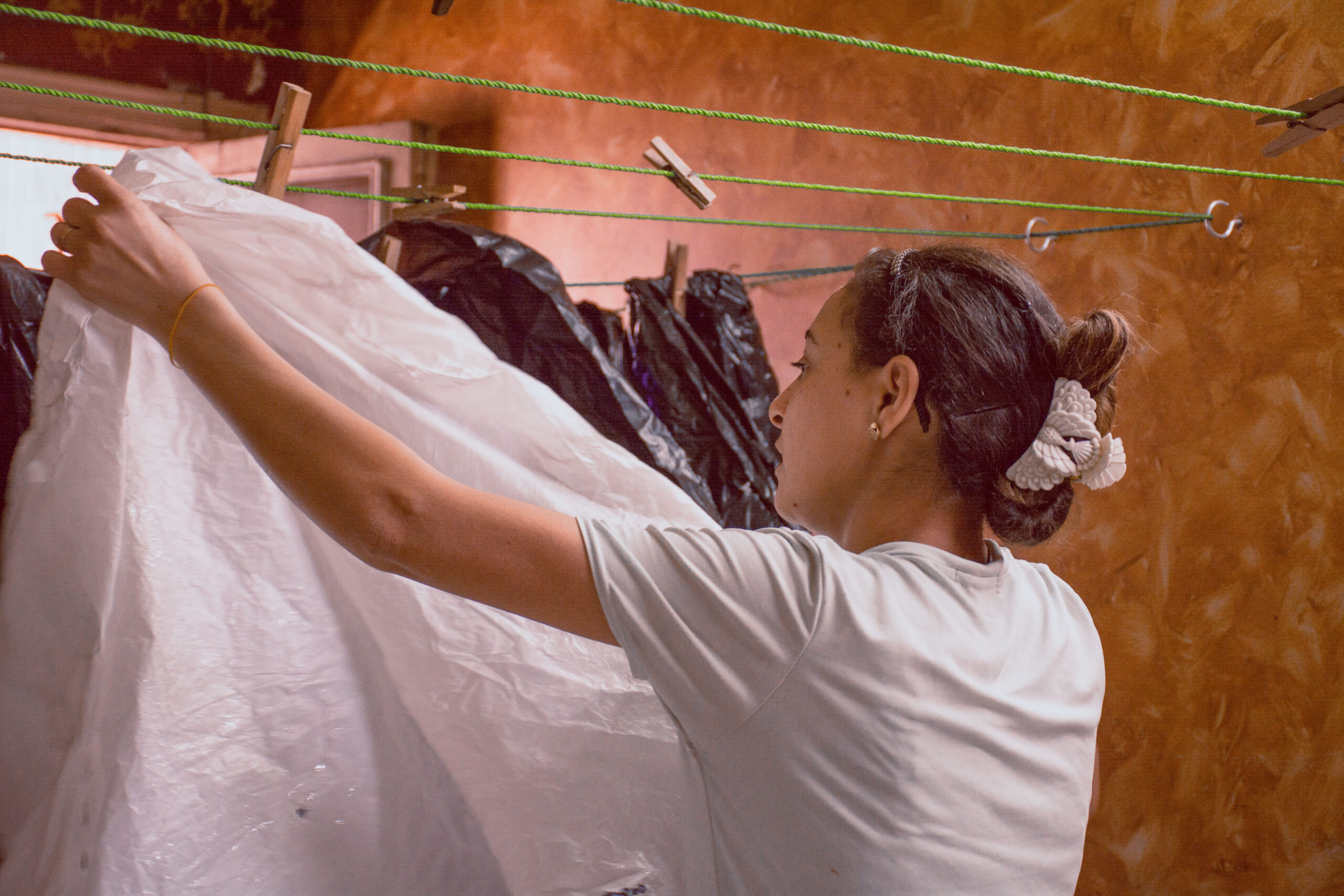
Each step of the process is traced and measured showing the supply chain material flow, the people behind it until the final product reaches the consumer with a QR code that tells the product's journey. The digital product passport is considered a major step towards the transition to a circular economy