


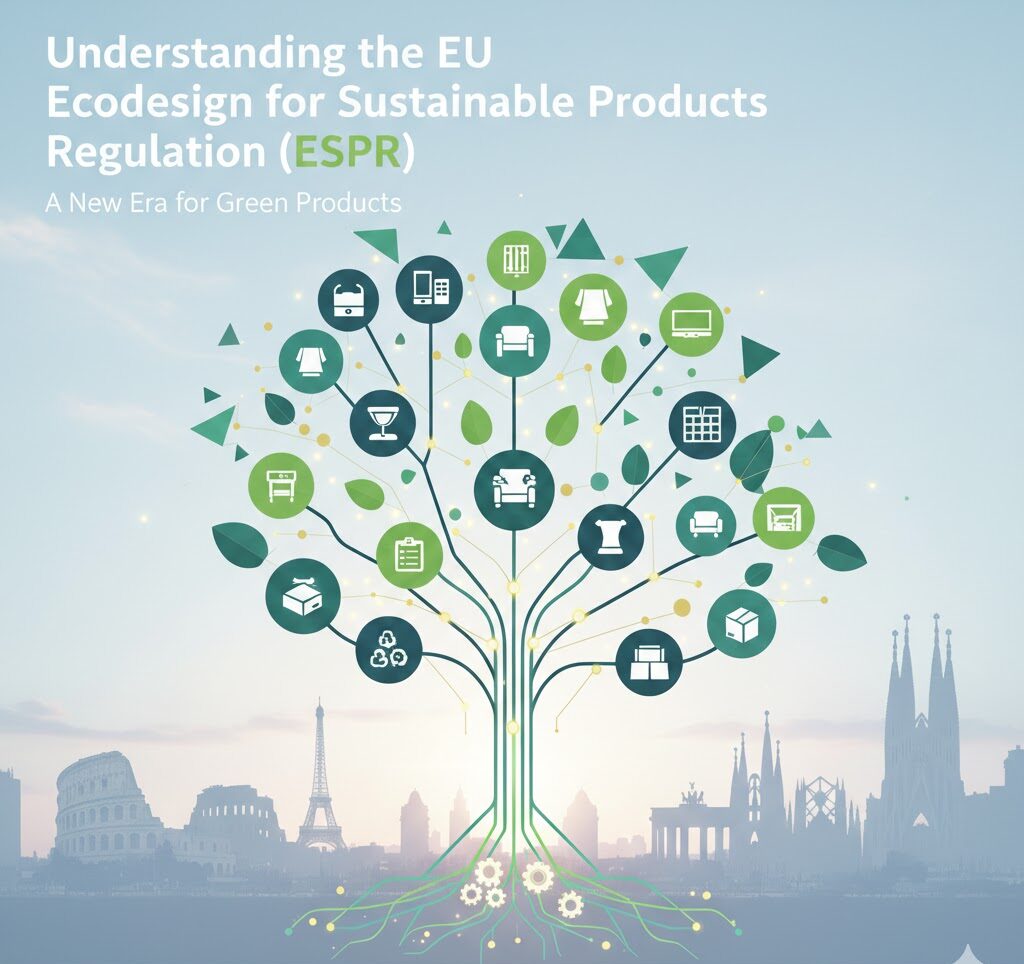
Understanding the EU’s Ecodesign for Sustainable Products Regulation (ESPR) and the Digital Product Passport (DPP)
The Ecodesign for Sustainable Products Regulation (ESPR) is a landmark piece of European Union legislation designed to transform how products are designed, manufactured, marketed, and managed across their entire lifecycle. At its core, ESPR seeks to make products sold in the EU market more sustainable, longer-lasting, repairable, recyclable, and transparent.
What Is the Digital Product Passport (DPP)?
Central to the ESPR is the introduction of the Digital Product Passport (DPP) as a digital record that provides a structured, accessible source of verified information about a product’s identity, composition, sustainability attributes, and lifecycle data. The DPP functions as a digital identity card for products, components, and materials, enabling unprecedented transparency across value chains.
In essence, the DPP is a machine-readable digital file that stores key data about a product’s:
• Materials and components
• Origin and manufacturing details
• Environmental performance and sustainability metrics
• Instructions for use, repair, and end-of-life treatment
• Regulatory compliance documentation
This data is linked to the physical product through a digital identifier such as a QR code, NFC tag, or similar data carrier that can be accessed by stakeholders from consumers and recyclers to regulators and market surveillance authorities.
Why the DPP Matters
The Digital Product Passport is more than a regulatory requirement it is a foundational tool for circular economy transformation. By standardizing product data and making it easily accessible, the DPP:
• Improves transparency and traceability throughout the supply chain.
• Enables repair, reuse, and recycling by providing stakeholders with the information needed at each lifecycle stage.
• Supports enforcement of sustainability requirements, giving regulators and market authorities better visibility into compliance status.
Ultimately, the DPP helps reduce waste, promote efficient resource use, and support consumer confidence by making sustainability claims verifiable.
Who Must Comply?
The DPP obligation applies to economic operators placing products on the EU market once a delegated act for that product group enters into force. This includes:
• Manufacturers
• Importers
• Brands and authorised representatives
• Distributors (where applicable)
Compliance with DPP requirements is independent of where products are manufactured, meaning that all products sold into the EU, whether produced inside or outside the Union, will need a compliant digital product passport when the rules apply to their category.